



Bridging STEM, Safety, and Empathy Prototyping with Wearable Technologies and Xplorlabs Resources
By Maggie Pollard, 7th-12th Grade FirstHand Program Facilitator
Philadelphia, Pennsylvania
Hands-on STEM learning for Philadelphia middle and high schoolers
I am a program facilitator at FirstHand, an out-of-school STEM program based in West Philadelphia, providing hands-on STEM learning experiences and career exposure to students in 7th-12th grades. As a program facilitator, I am responsible for facilitating 10-week classes, engaging students with mentors, and writing/rewriting curricula.
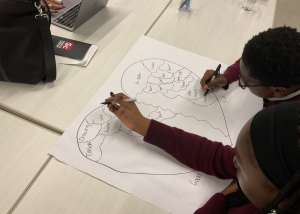
We offer a class called “Future Techstyles” to a group of students from Girard College that feels uniquely ours, and it was a great opportunity to supplement the curriculum with activities from Xplorlabs. In the course, students learn block coding with micro:bit, a pocket-sized computer designed for students to learn coding and sewing techniques, and then they create a prototype of a wearable technology. It can be anything that matters to the students as long as it incorporates the micro:bit, block coding, and sewing. The students brainstorm their ideas by creating a heartbreak map where they write the things they love on one side and things that upset them on the other. They then come up with a prototype idea that bridges what they care about with a problem they want to solve in order to prototype with empathy.
Xplorlabs resources used to supplement learning
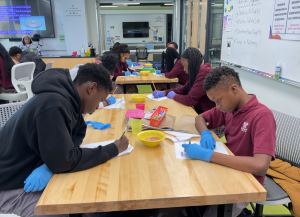
This semester, we used the Xplorlabs crush test and bologna test to teach students the importance of battery safety and proper disposal since the micro:bits in their wearable technologies are battery operated. Many of the students had no idea the danger lithium coin batteries could present if accidentally consumed or how lithium-ion batteries needed to be handled and disposed of. It was amazing to see them light up during the different activities and talk about how their learnings connected to their personal lives.
Many of them connected the crush test to what would happen if they were to throw out a battery in the trash and a garbage truck crushed it. Additionally, they connected to the bologna test by discussing how important it was to keep batteries out of reach of younger siblings or pets.
Student takeaways
Throughout the semester, the students got the phrase “recycle your batteries!” stuck in their head like an earworm and would say it throughout class and their presentations. I loved how teaching them about the safety science behind their wearable technologies made them that much more invested in their prototypes and presentations.
For their final showcase, they were tasked with creating a wearable technology prototype and had to create a poster and sales pitch to go along with it. Visitors at the final showcase acted as investors and would listen to each of their sales pitches before voting on categories like best prototype, most creative, best presentation, etc.
Students also had to talk about the importance of battery safety and how to recycle their wearable technology prototype during their sales pitch, providing their investors with local initiatives to recycle the batteries. Supplementing this course and its final showcase with Xplorlabs resources was very seamless and only motivated them more.