







More Than Just Science: Came for the Science, Gained a New Perspective
By Nancy Schunke, Pre-AP Chemistry and Engineering Teacher and 2024-25 Xplorlabs Educator Fellow, Wolfforth, Texas
As I scrolled through the conference schedule, several sessions immediately caught my attention, and questions started flashing through my mind:
“What is Xplorlabs about? Would my students find learning about lithium-ion batteries as interesting as I do? Oh, they’re going to love the fire chemistry, right?”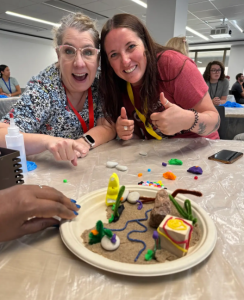
I knew I had to check it out. Over the course of the conference, I attended three sessions led by the Xplorlabs team and I was genuinely impressed. The topics were not only exciting and engaging, but I could instantly see how relevant they would be for my students. After the conference, I began integrating elements of Xplorlabs in my classroom and the response from my students was overwhelmingly positive.
Exploring safety science in the classroom: Xplorlabs uses safety science, lithium-ion battery education, and fire chemistry to help connect students to exciting career opportunities
When I found the opportunity to apply for the Xplorlabs Educator Fellowship, I did not hesitate to submit an application. Going into the Xplorlabs fellowship, my goals were centered on deepening my understanding of the science behind safety, particularly the chemistry and engineering elements that drive innovation in the safety science field. I was eager to enhance my teaching toolkit with engaging, research-based lessons that could spark curiosity in my students.
I was also interested in expanding how I teach engineering. While robotics tends to dominate the K-12 engineering space, I’ve found that many students, especially those interested in fields beyond mechanical engineering, are looking for other entry points. I felt the exploration of safety science research and problem-solving would help students, especially young women, see themselves as scientists and engineers. The Xplorlabs Educator Fellowship exceeded those expectations. Not only did I gain valuable insight into complex topics like lithium-ion battery chemistry, fire dynamics, and the development of more effective solar panels, but I also had the opportunity to explore how real-world safety science research translates into action, showing my students how engineers and scientists are using this research to improve, and even save, lives.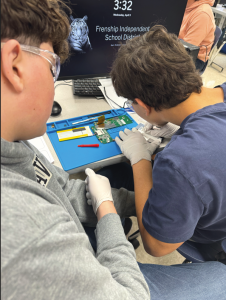
Aha! moments and powerful conversations: Redefining science education through unique student-centered pedagogy
At our first in-person workshop with the fellowship, I realized this experience was something truly different. Yes, we dove into science, learning about lithium-ion batteries, how fire behavior has evolved over time, and experiencing cutting-edge research in safety science.
What caught me by surprise was the emphasis on pedagogy. The fellowship didn’t just present content; it challenged us to think deeply about how we teach. We explored action-oriented teaching practices, shared perspectives, and even spent time imagining preferred futures for our students and our world. That was powerful.
In schools, we often talk about culture, about meeting students where they are. But how often do we ask them where they want to be in our shared future on this planet? Do we truly see them as passionate, concerned citizens? Are we connecting the science they’re learning to how they might use it to make that future better? These were the kinds of challenges we wrestled with together.
Collaboration was at the heart of the experience. Working alongside other passionate educators, we exchanged ideas, shared classroom strategies, and supported one another in thinking beyond standards and testing. The conversations were thoughtful, inspiring, and grounded in the shared belief that science education can and should empower students to shape the world they will inherit. By doing this, they not only learn the science, they utilize it to help educate others and shape change — evidence that will go far beyond a standardized test.
The work doesn’t end here. Give your students a role in shaping their future.
The experience doesn’t end with the close of the fellowship. In many ways, it’s just the beginning. My students’ projects continue to evolve, and I’m committed to finding new ways to plant seeds of change and relevance in their learning, helping them connect even the most challenging science concepts to real-world problems and meaningful action. We are currently laying the groundwork for more conversations about sustainability and dealing with e-waste in our community.
What I have started to notice is that this is the kind of teaching that stays with students. It’s not just about mastering content, it’s about becoming informed, empowered individuals who know they have a role in shaping their future. And for me as an educator, it is so exciting to witness. While there’s still a long road ahead, the level of engagement I’ve seen gives me hope. This generation is more than capable. They’re motivated, thoughtful, and ready to make an impact.
As educators, it’s our job to guide that energy and show them that science isn’t just something we learn — it’s something we use to make the world better.
This fellowship reshaped not just my lessons, but my mindset. It reminded me that science education should empower, challenge, and connect. If you’re even a little curious about how safety science can transform your classroom, I encourage you to visit Xplorlabs.org and explore the resources firsthand. Whether it’s the fire safety pathway, the lithium-ion battery lessons, or the eye-opening exploration of e-waste, there’s something there that will spark curiosity.
Try one lesson. Just one. See how your students respond when science becomes personal, purposeful, and tied to the real world. You might be surprised by the conversations it starts and the solutions they begin to imagine.